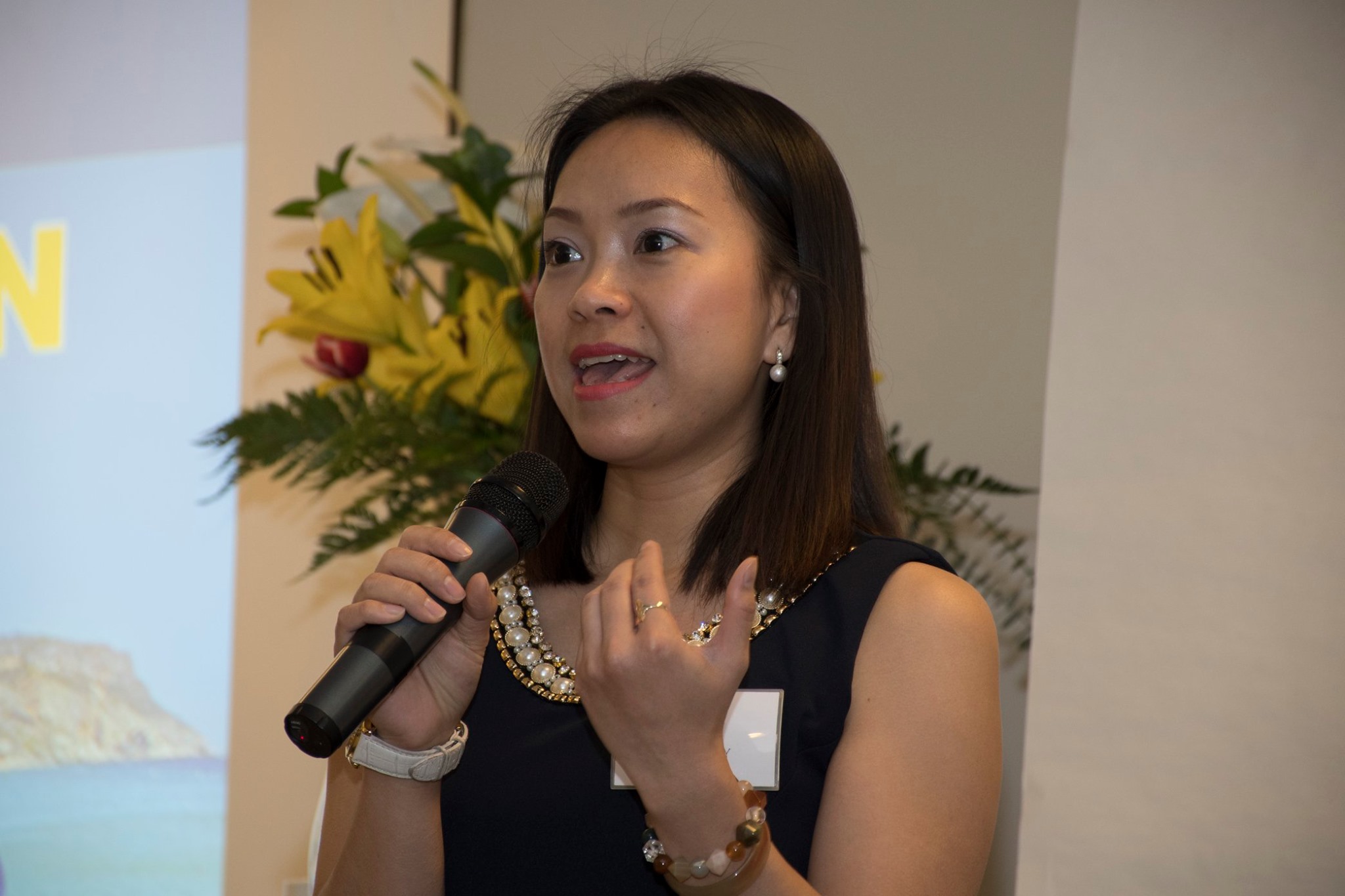
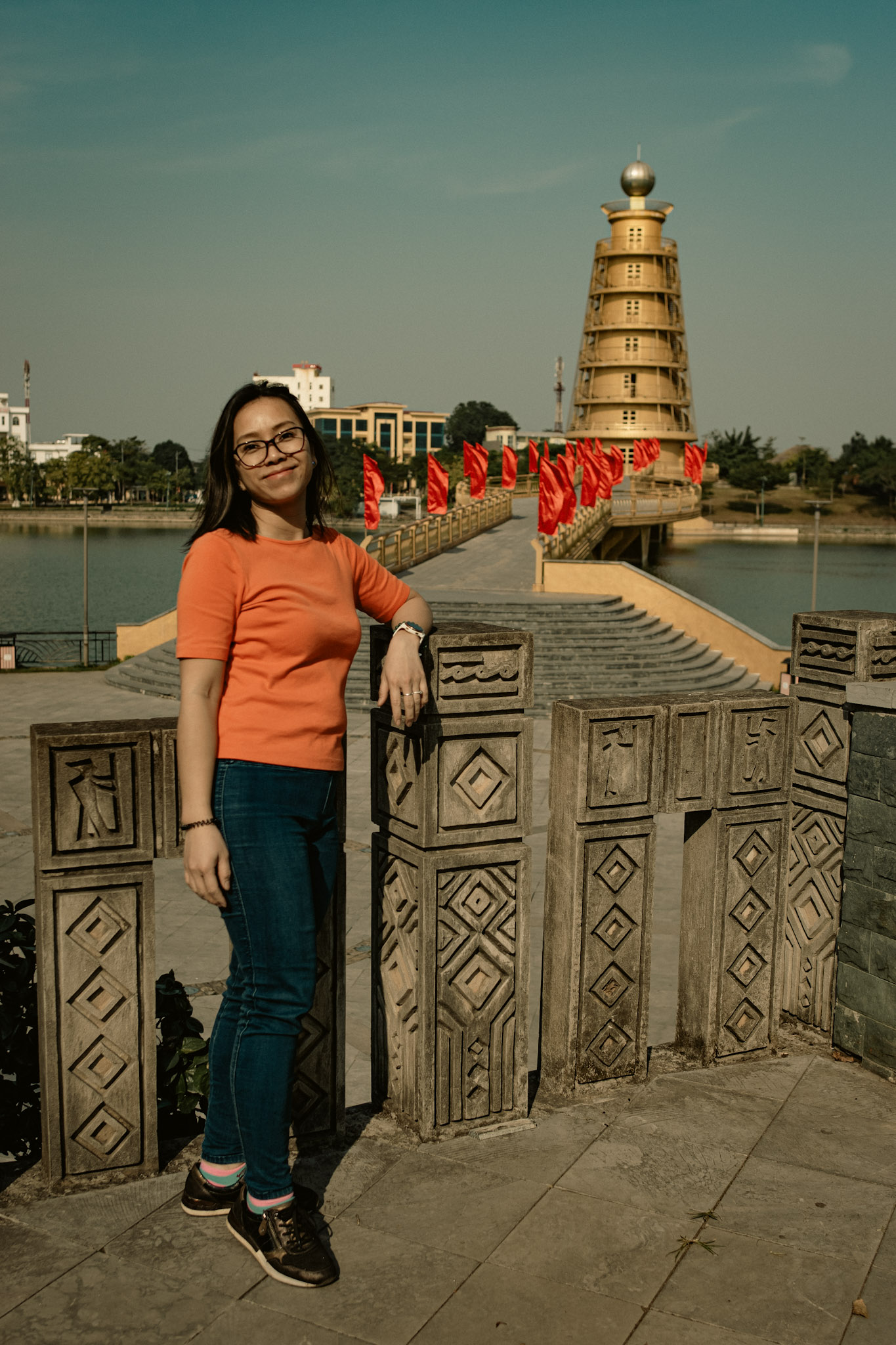
I grew up in Vietnam, in a small house with my grandmother and father. The scent of rice on the stove, quiet evenings, a world where everything made sense. I felt safe there — the way only a child can feel safe who doesn't yet know that things can change.
At eight, the ground beneath my feet shifted. Living with my second grandmother, a different environment, a different rhythm. Nobody told me it was okay to feel sad — so I learned not to say it. I function. I manage. I'm strong. And that autopilot steered me for the next twenty years without me even knowing it.
At sixteen came another change — I moved to be with my mother in Europe, to the Czech Republic, 9,000 km from my grandmothers, my friends, from everything I knew. People all around me speaking a language I didn't understand, and I just watched, trying to guess what it all might mean. You can probably imagine where my self-confidence was. And on top of that, puberty — every feeling magnified a thousand times.
But I was also handed an enormous opportunity for growth. As if life said to me: “You have the chance to build a better version of Duong, but keep only what will serve you here — and rebuild the rest from scratch.”
Those first years were tough. But my mother said something that lives inside me to this day: “You can become anyone you want. I believe in you.”
So I believed it. I learned Czech, graduated high school, and earned a degree in economics and management in a language I couldn't even pronounce at sixteen.
In Prague I joined an international education company and discovered that facilitating education was what I was born for. Targets, pipelines, deadlines — and I thrived in it, not just survived. I was among the top performers on my team and loved every day of that work.
But more important than the results was something else. For the first time I understood firsthand what it means to live under the pressure of performance. And that is exactly why I understand the people who come to me today — I don't know that pressure from textbooks; I know it from my own body.
Then came London and NLP Academy — a place where leaders from around the world come to learn the tools of transformation in neuro-linguistic programming directly from its co-founder, Professor John Grinder. I had the honour of working for him. I served as a key member of the team, trained and mentored by John Grinder and especially Michael Carroll, the academy's director. It would look great on a CV, but the most valuable thing was actually something entirely different — every day I applied NLP to myself. It wasn't theory I was studying. It was a way of living.
And that's when I understood something that changed my entire view of the world: most people don't live their own life. They live patterns they inherited or unconsciously adopted from others — and they don't even know it.
Gradually I integrated NLP with neuroplasticity, psychosomatics and inner-child work. I thought I was ready for anything.
And then I became a mother. And discovered that no training had prepared me for this — because motherhood doesn't hold up a mirror to what you know, but to who you are. Every reaction to my child became a conscious choice: do I pass on the old pattern I inherited, or do I create a new one right here and now? Motherhood became my deepest laboratory of personal transformation.
A child who at one year old learned to survive without her mother. A teenager in a new country who didn't understand a single word — and yet somehow fought her way among the best in the class, I still don't know how. A girl who fell in love with education and what it can do for people. A woman who knows from the inside what it's like to hold everything together — career, family, expectations — and pretend it's all fine. And a mother who one day decided that this is where the chain of inherited patterns ends.
Today I create a safe space for people who are used to being strong for everyone around them, but somewhere along the way forgot to be strong for themselves too.
I don't fix you. I bring you back to yourself.